
Rebar Shearing: Hydraulic vs Mechanical Cutting Machines
When a rebar fabrication shop or precast plant invests in a cutting machine, the choice between hydraulic and mechanical shearing is not just about price—it affects daily productivity, noise levels, maintenance costs, and which jobs you can take on. Both technologies have their place, but they serve different operational profiles. This guide compares the two approaches using real Gongda machines to help you decide which fits your workshop or construction site.
Power and Cutting Force
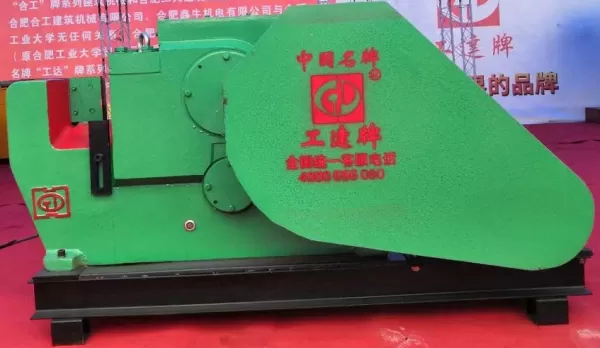
Mechanical shears rely on a flywheel and clutch to deliver a sudden, high-impact stroke. They are excellent for cutting smaller-diameter bars quickly and are often more compact. Gongda's GQ50A, for example, handles 6–50 mm round and 6–36 mm ribbed bars with a robust mechanical design that is ideal for daily site and shop use. For larger bars, the GQ70A steps up to 70 mm A3 round steel with a 160-ton shear force—still a mechanical machine, but built for heavy-duty work.
Hydraulic shears, on the other hand, generate force through hydraulic cylinders, providing a smoother, more controlled cut. This is especially valuable when cutting high-strength or larger-diameter bars, as the blade speed can be adjusted to reduce deformation. The GDQX-500 is Gongda's hydraulic rebar shearing production line, designed for mass production of ribbed and round bars. Its hydraulic system allows continuous, high-capacity operation without the mechanical shock that can wear down components over time.
Noise and Vibration
Mechanical shears are inherently noisier. The flywheel engagement and clutch release produce a loud clunk with every stroke, and the vibration can be significant—especially on a production line. This can be a concern in urban construction sites or indoor workshops where noise regulations are strict. Operators may also experience fatigue from constant exposure to high noise levels.
Hydraulic shears operate more quietly and with less vibration. The hydraulic pump runs continuously, but the cutting stroke is smooth and controlled. For a plant running multiple shifts, this can improve working conditions and reduce wear on the surrounding structure. The GDQX-500's hydraulic design also allows for a more compact footprint compared to a mechanical shear of similar capacity, which can be a space-saving advantage.
Maintenance and Longevity
Mechanical shears have a simpler construction, but the clutch, flywheel, and gears require regular lubrication and periodic adjustment. Over time, the clutch linings wear and need replacement. For a shop that uses the machine intermittently, this is manageable. However, in high-volume production, the mechanical shock can lead to faster wear on the blade holder and frame.
Hydraulic systems have fewer moving parts in the cutting mechanism, but they introduce pumps, valves, seals, and hydraulic fluid. These require routine checks for leaks and fluid levels. The GDQX-500's hydraulic line is built for continuous duty, and its sealed system reduces contamination risk. While hydraulic components may need more specialized servicing, they often have a longer service life under heavy use because the force is applied gradually, reducing stress on the machine structure.
Best Use Cases
Choose a mechanical shear like the GQ50A or GQ70A if your work involves daily cutting of bars up to 50 mm (or 70 mm for occasional heavy bars) and you need a simple, cost-effective machine that is easy to operate and maintain. These are ideal for small to mid-size rebar workshops, on-site fabrication, and precast plants where the cutting volume is moderate and the noise is not a major issue.
Opt for a hydraulic shear like the GDQX-500 if you run a high-volume operation that requires continuous cutting of large batches. The hydraulic system excels in mass production, where consistent quality and minimal downtime are critical. It is also the better choice if you are cutting high-strength steel or need to integrate the shear into a fully automated production line. The lower noise and vibration are additional benefits for indoor plants.
Ultimately, the decision comes down to your production volume, bar size range, and working environment. If you are still unsure, Gongda's team in Hefei, Anhui, China, can help you evaluate your specific needs. We supply machines to contractors and fabricators worldwide, including Russia, Spain, Latin America, and the Middle East.
Request a quote today via WhatsApp or email to discuss which Gongda shear fits your operation best. Our engineers will help you match the machine to your rebar processing requirements.
Send your requirement on WhatsApp — we reply within one business day.
WhatsApp Request a Quote →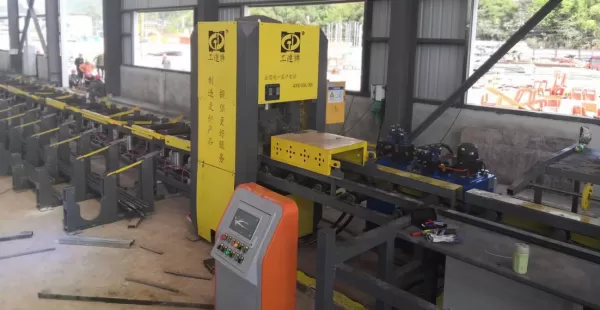
More Articles
Gongda Rebar Machinery: Factory, Brand and What We Export
Gongda is a rebar processing machinery brand rooted in the electromechanical works of Hefei University of Tech…
Applications & ProcessesBuilding a Rebar Processing Line: Layout for a Fabrication Plant
Setting up a rebar fabrication plant is a significant investment. The difference between a profitable workshop…
Applications & ProcessesRebar Arc Bending for Slabs and Tunnel Lining
In modern construction, curved rebar is no longer a rare specialty. From the arched reinforcement of tunnel li…
Applications & ProcessesWhat Is a Rebar Stirrup Bending Machine (and Do You Need One)?
If you work with reinforced concrete, you already know that stirrups (also called links or ties) are the close…
Applications & ProcessesRebar Machines for Prefab Housing Production
In prefab housing production, rebar processing is a critical step that directly impacts structural integrity a…
Maintenance & OutputSafety Guidelines for Rebar Processing on Site
Rebar processing equipment brings speed and consistency to construction sites, but it also introduces serious…
Ready to Talk Numbers?
Send us your rebar processing requirements and get a factory-direct quotation within one business day.