
Thread Rolling vs Welding Rebar Joints: Pros and Cons
When connecting rebar on a construction site, contractors and fabrication plants face a critical choice: thread rolling (mechanical splicing) or welding. Both methods have their place, but the decision affects quality, on-site logistics, and total cost. This article compares rebar thread rolling vs welding, helping you choose the right approach for your projects. Gongda, based in Hefei, Anhui, China, offers the HGS-40 Rebar Thread Rolling Machine, which is designed for 14-40 mm bars, a key tool for mechanical rebar connections.
Quality and Structural Integrity
Welding rebar joints can alter the metallurgical properties of the steel, especially in high-strength bars. Heat-affected zones may become brittle, and improper welding can lead to cracks or reduced ductility. In contrast, mechanical connections like thread rolling preserve the original properties of the rebar. The HGS-40 rolls threads onto the bar ends, creating a precise, cold-formed thread that mates with a coupler. This method provides a joint that is often stronger than the bar itself, ensuring consistent performance under stress. For seismic zones or critical structures, mechanical splices are often preferred because they deliver predictable, high-strength connections without the risk of weld defects.
On-Site Conditions and Workability
Welding requires skilled welders, a reliable power supply, and often special permits. It also generates sparks, fumes, and heat, which can be hazardous in confined spaces or near flammable materials. Thread rolling, on the other hand, is a cold process that is cleaner and safer. The HGS-40 is portable and can be used directly on the job site. It operates with a standard power supply and requires minimal training. The machine rolls threads in seconds, and the couplers are simply screwed on. This speed and simplicity reduce labor costs and speed up project timelines. Additionally, thread rolling works well in all weather conditions, whereas welding may be restricted in wet or windy environments.
Cost Considerations
While welding equipment is often cheaper upfront, the total cost of welded joints includes skilled labor, consumables (electrodes, gas), and potential rework due to inspection failures. Thread rolling requires an initial investment in a machine like the HGS-40, but it pays off through faster installation, lower labor skill requirements, and fewer quality issues. Couplers are a recurring cost, but they are offset by reduced labor hours. For large projects, the speed of mechanical splicing can significantly cut overall costs. The exact savings depend on your labor rates, rebar diameter, and project scale. To get a precise estimate for your operation, request a quote from Gongda with your project details.
Versatility and Applications
Mechanical connections are ideal for precast concrete elements, where rebar ends must be joined quickly and reliably. They are also used in repair works, where access for welding is limited. The HGS-40 handles bar diameters from 14 mm to 40 mm, covering a wide range of construction needs. It can be used for both horizontal and vertical splices, and it works with standard couplers available worldwide. Welding, while still common for non-structural or temporary connections, is less versatile in these scenarios. For rebar fabrication plants, thread rolling machines can be integrated into production lines, enabling high-throughput manufacturing of prefabricated rebar cages. Gongda's HGS-40 is a robust choice for such settings, backed by years of engineering expertise from the Hefei University of Technology.
In summary, thread rolling offers superior quality, better on-site adaptability, and often lower total costs compared to welding. For your next project, consider the HGS-40 Rebar Thread Rolling Machine from Gongda. Contact us via WhatsApp or email for a quote tailored to your rebar sizes and project volume.
Send your requirement on WhatsApp — we reply within one business day.
WhatsApp Request a Quote →Products
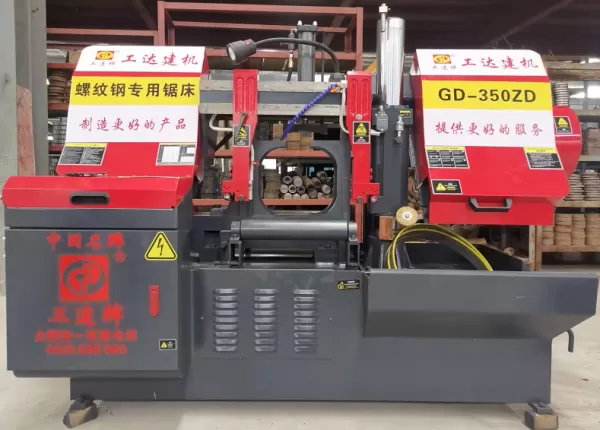
Rebar Band Sawing Machine
Rebar band sawing machine for threaded steel with a 400×350 mm cutting range.
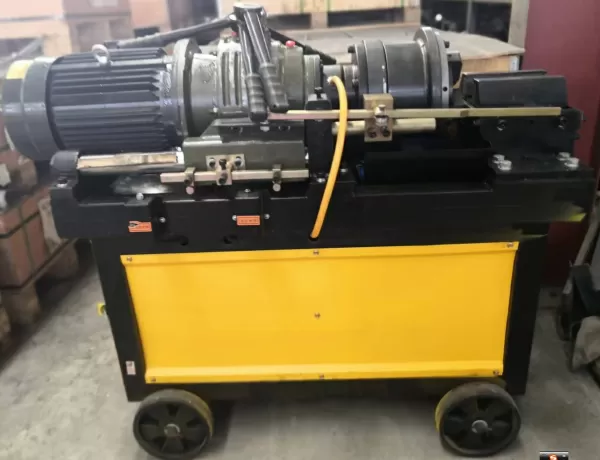
Rebar Thread Rolling Machine
Rebar thread rolling machine for thread-rolling 14-40 mm bars for mechanical splices.
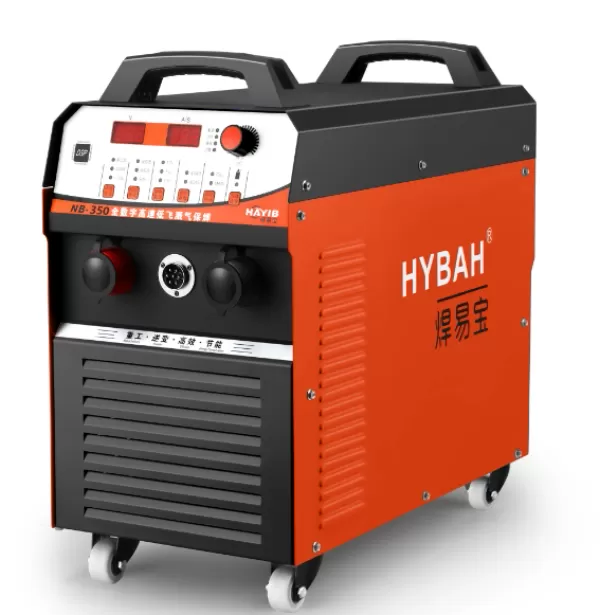
CO2 MIG Welding Machine
Digital DSP-controlled CO2 MIG welding machine with 350 A output for carbon and stainless steel.
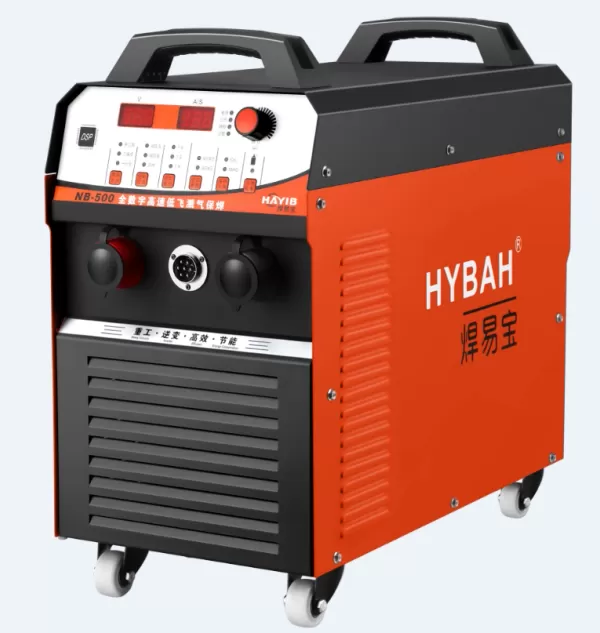
CO2 MIG Welding Machine
Digital DSP-controlled CO2 MIG welding machine with 500 A output for heavy fabrication welding.
More Articles
Gongda Rebar Machinery: Factory, Brand and What We Export
Gongda is a rebar processing machinery brand rooted in the electromechanical works of Hefei University of Tech…
Applications & ProcessesBuilding a Rebar Processing Line: Layout for a Fabrication Plant
Setting up a rebar fabrication plant is a significant investment. The difference between a profitable workshop…
Applications & ProcessesRebar Arc Bending for Slabs and Tunnel Lining
In modern construction, curved rebar is no longer a rare specialty. From the arched reinforcement of tunnel li…
Applications & ProcessesWhat Is a Rebar Stirrup Bending Machine (and Do You Need One)?
If you work with reinforced concrete, you already know that stirrups (also called links or ties) are the close…
Applications & ProcessesRebar Machines for Prefab Housing Production
In prefab housing production, rebar processing is a critical step that directly impacts structural integrity a…
Maintenance & OutputSafety Guidelines for Rebar Processing on Site
Rebar processing equipment brings speed and consistency to construction sites, but it also introduces serious…
Ready to Talk Numbers?
Send us your rebar processing requirements and get a factory-direct quotation within one business day.